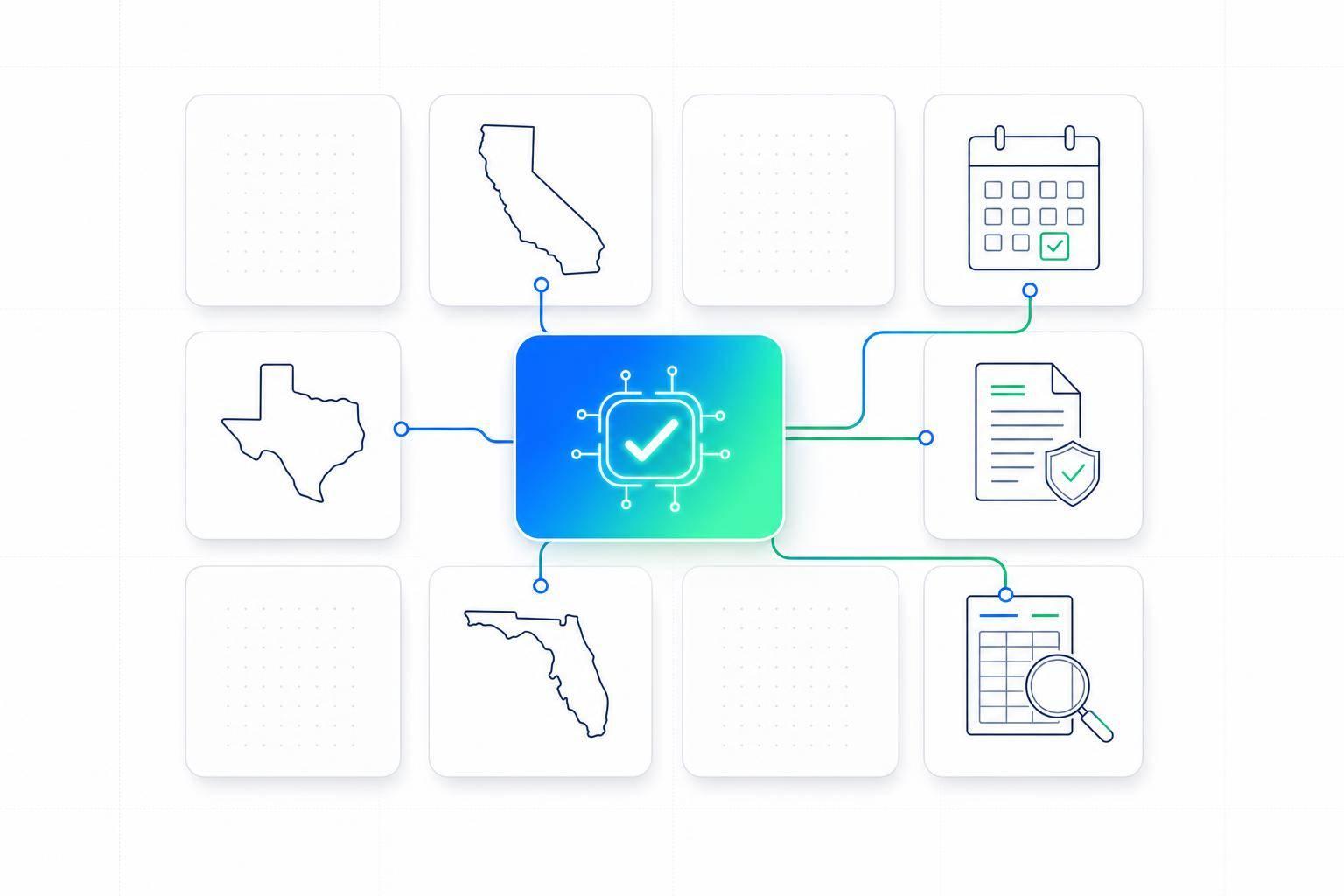
If you hire in more than one country, one stock option plan is rarely enough on its own. Tax timing, payroll withholding, labor rules, and reporting can change from place to place, so I need to set a core plan first and then check each country before I grant anything.
Here’s the short version:
- I start with one clear goal: hiring, retention, or reward
- I size the pool from my headcount plan, not guesswork
- I set standard grant terms like vesting, exercise price, and leaver rules
- I check U.S. tax treatment and then map local country rules
- I build a repeatable grant process for approvals, tracking, payroll, and reporting
- I tie grant data back to dilution, stock-based comp, and investor records
A few points matter more than most:
- Employees can be taxed at vesting, exercise, sale, or liquidity, depending on the country
- Cross-border moves during vesting can change withholding and reporting
- Some Indian startups may allow tax deferral for up to 60 months, with remittance due within 14 days of the trigger event
- Bad records across grant letters, valuations, and cap tables can lead to audit issues and employee confusion
This means I should keep the main framework simple, keep records aligned, and only add local changes where the law requires them.
| Area | What I need to decide early |
|---|---|
| Plan goal | Hire, retain, or reward |
| Pool size | Grants by role, level, and country |
| Grant terms | Vesting, price, post-termination window, leaver rules |
| Country review | Tax event, withholding, reporting, labor law |
| Admin process | Approvals, documents, tracking, payroll setup |
| Reporting | Dilution, expense, cap table, investor records |
If I get these six areas right before the first grant, the rest of the plan is much easier to run.
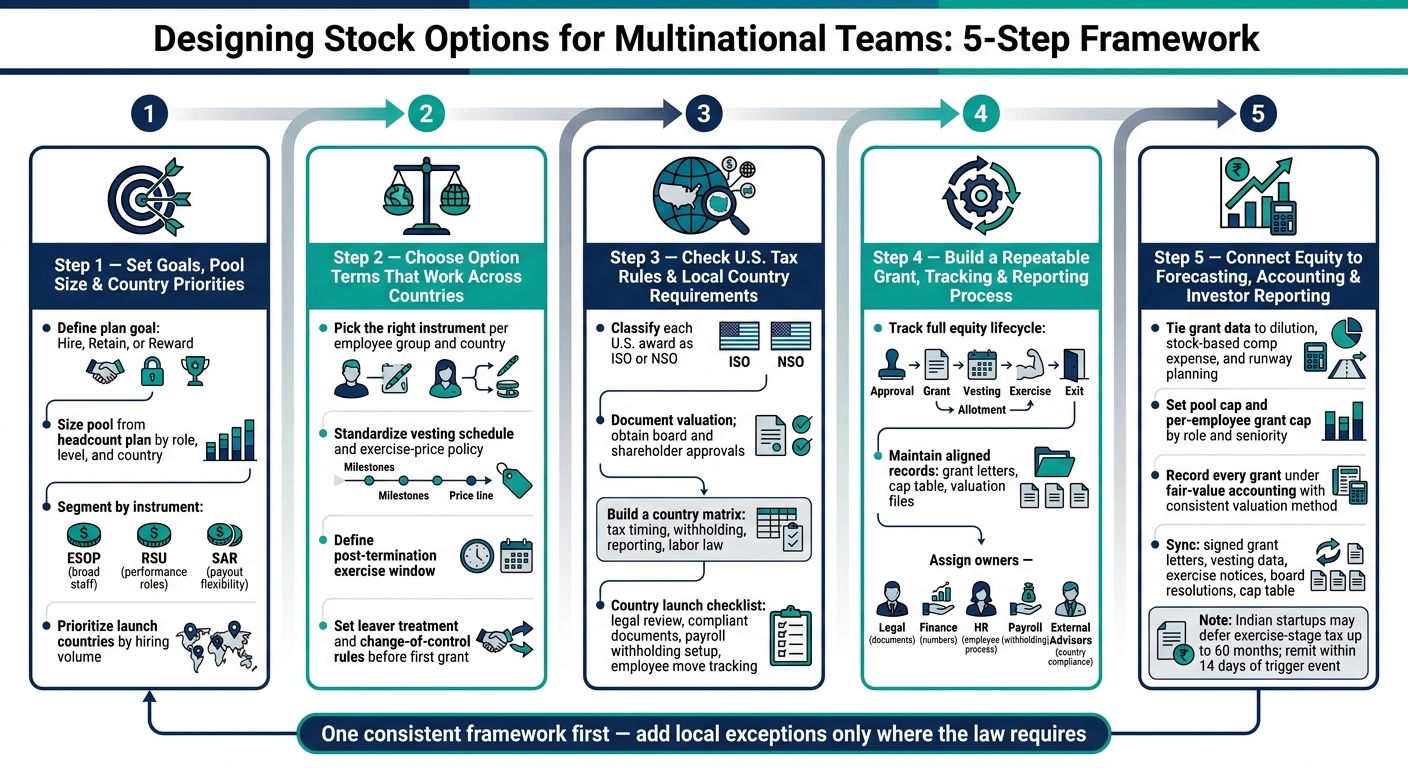
Stock Options for Multinational Teams: 5-Step Framework
1. Set Your Goals, Pool Size, and Country Priorities
Define what the plan needs to do
Start by deciding what this plan is supposed to achieve. Is it meant to help you hire, keep people from leaving, or reward a small group in key roles? That decision shapes the size of the pool, the size of each grant, and the order of rollout.
It also affects the type of awards you use. In some cases, standard options make sense. In others, performance-linked awards fit better. Some companies use both.
Size the pool using a hiring-based model
The simplest way to size the pool is to build it from your hiring plan. List every role you expect to fill, assign a grant size for each one based on seniority and geography, and then compare that total with what you already have available in the pool.
If the math shows a gap, deal with it before offers go out. That step matters. Nobody wants to be halfway through hiring and then realize the plan can’t support the grants being promised.
After you size the pool, break grants down by role and geography so the plan matches how hiring will happen in practice.
Segment grants by role and geography
Role and country should shape both grant size and instrument choice. A broad-based plan for staff in one market may not work the same way for senior hires in another. The goal is to match the grant type to the role and the level of country complexity.
| Employee Group | Instrument | Primary Purpose |
|---|---|---|
| Broad staff | ESOP | Hire and retain |
| Performance-linked roles | RSU | Reward milestones |
| Need payout flexibility | SAR | Cash or equity settlement |
Start with the countries where most of your hiring will happen. Get the core plan working there first. Then add higher-complexity jurisdictions later, once the main structure is in place.
With goals, pool size, and country priorities set, the next step is choosing terms that work across borders.
sbb-itb-17e8ec9
2. Choose Option Terms That Work Across Countries
Pick the right equity instrument for each employee group
Choose the simplest compliant instrument for each employee group in each country. In some markets, standard options make sense. In others, phantom equity or SARs are a better fit.
Tax timing can change a lot from one country to another. Some countries tax at exercise or sale. Others tax at vesting or liquidity. Local exemptions can also change what employees actually take home, so the same grant may land very differently across borders.
Once you've picked the instrument, lock in the core terms so grants stay consistent across countries.
Set standard vesting, exercise price, and post-termination rules
Standardize the vesting schedule and exercise-price policy so grants are easier to explain and administer across countries. It keeps the program cleaner and cuts down on one-off exceptions.
You also need to check that the exercise price meets local rules. Then define the post-termination exercise window up front. That window determines what exercise rights employees keep after they leave.
Define leaver treatment and change-of-control rules early
Spell out what happens to vested and unvested awards when someone leaves. Do this before the first grant goes out, not after a hard case shows up.
The same goes for change-of-control treatment. Set those rules early so administration stays consistent and employees know what to expect across countries.
After the terms are set, test them against U.S. tax rules and each launch country's requirements before granting.
3. Check U.S. Tax Rules and Local Country Requirements Before Granting
Review the U.S. rules that apply to global grants
Before you issue any grant, sort the award as an ISO or NSO for each eligible U.S. employee group. At the same time, document the valuation for tax and accounting and get the needed board and shareholder approvals.
You also need to track employee moves from the grant date forward. If someone relocates across borders during the vesting period, update withholding, reporting, and tax records before the next tax event. From there, use those U.S. classifications as the starting point for each country's launch rules.
Map tax, reporting, and employment rules by country
Each country has its own rules for tax, withholding, and reporting. That means you can't just copy your U.S. process and hope it works elsewhere.
Before any non-U.S. grant, build a country matrix that covers tax timing, withholding, reporting, vesting, and labor-law requirements. Do this before the first non-U.S. grant goes out. The goal is simple: turn legal and tax rules into a practical launch checklist your team can actually use.
Build a country launch checklist before the first grant
Before the first grant in a new country, make sure your checklist covers:
- Local legal and tax review - Confirm the scheme is allowed under your constitutional documents and approved through the required board and shareholder resolutions.
- Compliant grant documents - Prepare a formal scheme document, a grant letter with the key terms, and any country-specific addendum required by local law.
- Payroll withholding setup - Make sure payroll can handle withholding at the right tax event and that remittance deadlines are mapped in advance.
- Employee move tracking - Put a process in place to flag cross-border relocations so tax, payroll, and reporting records stay up to date.
- Owners and records - Assign owners for legal, tax, payroll, and cap table updates.
Once that checklist is done, standardize the grant workflow, tracking, and reporting.
4. Build a Repeatable Process for Grants, Tracking, and Reporting
Set up plan documents and the approval workflow
Take your country checklist and turn it into one repeatable workflow for every grant. In practice, that means having a board-approved scheme, the right resolutions, grant letters, and country-specific addenda ready each time. You also need to keep the grant notice, cap table records, and valuation files lined up. Update the cap table at allotment, when shares are issued.
If the grant notice says one thing, the cap table says another, and the valuation file shows something else, people notice. That creates employee distrust and adds audit risk.
A repeatable process helps keep cross-border grants consistent, even when employees relocate and local rules shift.
Track vesting, exercises, expirations, and employee moves
For each grant, keep the core data fields needed to manage the option through its full life cycle: grant date, vesting schedule, exercise price, expiration date, termination date, country of work at grant, and relocation history. Relocation history matters because payroll and reporting need to stay current.
Track each grant from approval to exit in one system. Use one record set so legal, payroll, and finance are all working from the same source.
Track each stage of the equity lifecycle: approval, grant, vesting, exercise, allotment, and exit.
| Lifecycle Stage | Data or Action Required |
|---|---|
| Scheme Approval | Special resolution and explanatory statement covering valuation and termination terms |
| Grant | Grant letter with grant size, price, and terms |
| Vesting | Service or performance milestone tracker |
| Exercise | Exercise notice, payment, and FMV at exercise date |
| Allotment | Board resolution and tax reporting |
| Holding and Exit | Transfer documents or buyback records for capital gains tracking |
Assign clear owners for each recurring task
Assign every recurring task an owner before the first grant. That way, each country follows the same process instead of making it up as it goes.
Here’s the owner map:
| Task | Primary Owner |
|---|---|
| Board and shareholder resolutions | Legal / Founder |
| Valuation and pool modeling | Finance Lead / CFO |
| Grant letters and vesting tracking | HR |
| Payroll withholding at exercise | Payroll / Tax Lead |
| Country compliance reviews | External Advisors |
Finance owns the numbers. Legal owns the documents. HR owns the employee-facing process. Payroll owns withholding. External advisors handle country compliance reviews and addendum updates.
Use this same data set for forecasting, accounting, and investor reporting.
5. Connect Equity Design to Forecasting, Accounting, and Investor Reporting
Use option data in dilution, hiring, and runway planning
Once the workflow is set, use that same grant data to plan dilution, stock-based comp expense, and runway.
Tie grants to open roles, expected vesting, and likely exercise timing. That matters more than it may seem at first glance. In some countries, employees owe tax when they exercise, before they can sell any shares. That can slow exercises down. If you model those delays, your dilution and runway numbers stay closer to what may happen in practice.
It also helps to set a pool cap and a per-employee grant cap based on role and seniority. Those limits give the cap table more predictability as hiring expands across countries.
Keep accounting and tax records investor-ready
Each grant creates stock-based compensation expense. Record every grant under fair-value accounting, and use one valuation method with the same inputs across grants.
Investors and auditors look for the same core records. Keep these items in sync:
- signed grant letters
- vesting data
- exercise notices
- board resolutions
- the cap table
Those records should tie back to valuation, expense, and cap table accuracy.
Reporting also depends on when each country says a tax event happens. Some jurisdictions let employees defer tax at exercise. Eligible Indian startups, for example, can defer exercise-stage tax for up to 60 months. The company must remit within 14 days of the trigger event. Tie local tax triggers straight to payroll and reporting timing so they work as one system.
Conclusion: Start with consistency, then adjust locally where needed
Start with one consistent framework, then add country-specific exceptions only when the law says you have to. Keep grant records, the cap table, and valuation records aligned.
Introducing OptionPlan by Index Ventures, a guide to stock options
FAQs
How do I choose the right equity instrument by country?
Choose based on your company’s stage, local tax laws, and worker classification. ISOs tend to be a strong fit for full-time employees at early-stage startups because of their tax upside. NSOs give you more room to work with for contractors, advisors, and employees above the $100,000 annual ISO limit.
As your company gets closer to liquidity, RSUs can be a practical option for senior hires who want more predictability. Because rules vary by country, consult local experts so you can stay globally consistent and locally compliant.
What happens if an employee moves countries while vesting?
If an employee moves to another country while their equity is still vesting, the company can end up with tax, reporting, and securities duties in both places. That overlap can change how the equity is taxed, handled, and reported for both the employer and the employee.
To stay on top of it, the company needs to pin down the new country’s compliance rules and keep an accurate, up-to-date compliance matrix. That helps avoid penalties and unwanted tax results.
When should I involve legal, tax, and payroll teams?
Loop in your legal, tax, and payroll teams as early as you can. Don’t wait until grants are already going out. Pull them in when you set up your equity plan, before issuing options so a valid 409A valuation is in place, and anytime you change agreements or reclassify options.
They should also be involved right away when timing matters. A good example is Section 83(b) elections, which must be filed within 30 days. Keep these teams close for tax withholding, cross-border compliance, and cap table reporting that stays accurate.