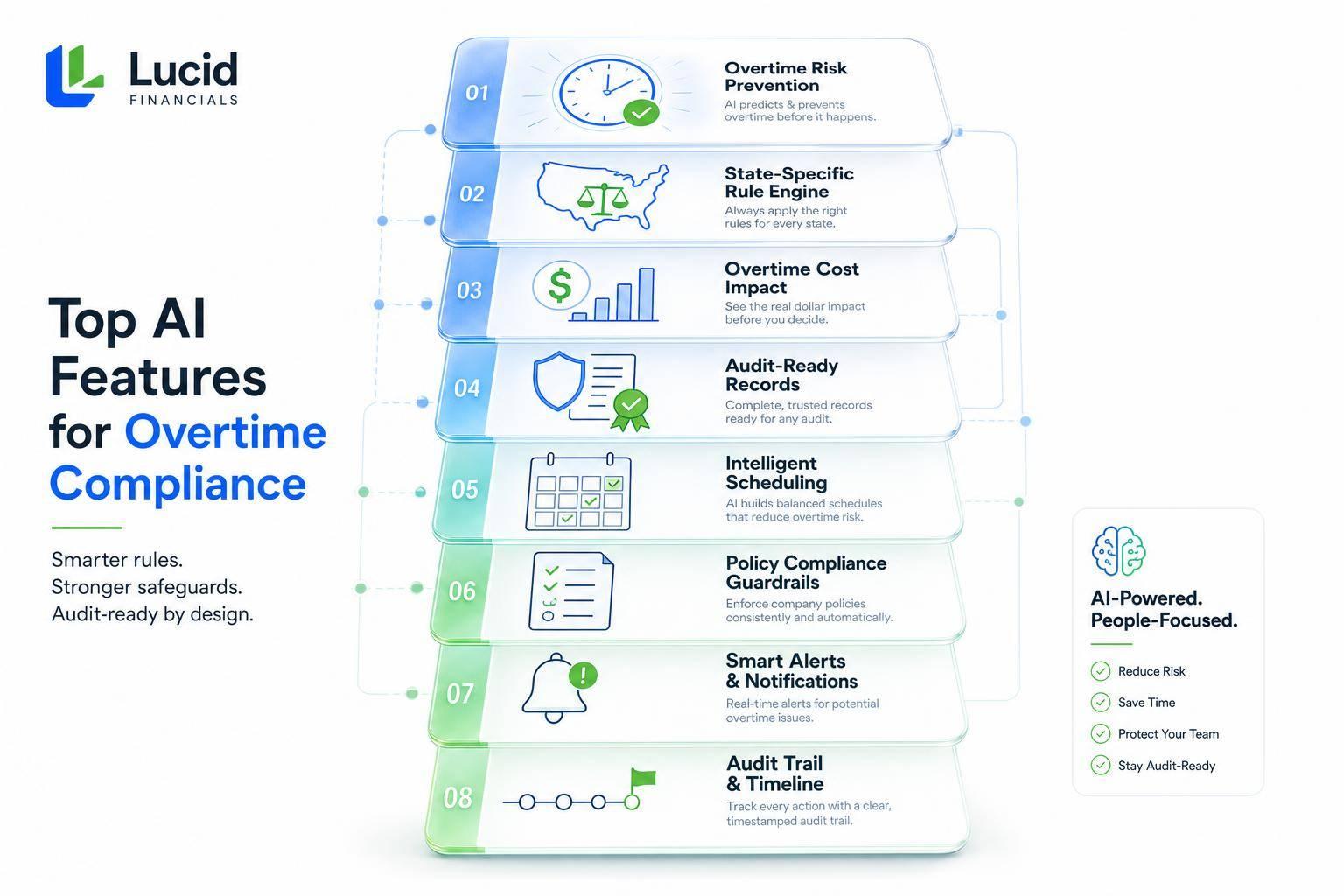
If you run a utility startup, missed compliance tasks can turn into fines, delays, and board-level problems fast. The core idea is simple: I should treat compliance as a live system, not a quarterly checklist.
Here’s the short version:
- I first map which rules apply based on states, services, assets, and customer touchpoints
- I use AI to watch data from SCADA, AMI, billing, access logs, permits, and finance systems
- I set AI up to flag issues, sort evidence, and track rule changes
- I keep people in the loop for shutoffs, billing changes, and grid-related actions
- I connect compliance events to cash flow, runway, and investor updates
A few facts stand out:
- NERC violations can reach up to $1 million per day per violation
- Smart meter and customer data can trigger state privacy duties in places like California, Colorado, Virginia, Connecticut, and Utah
- Small teams usually get the most from AI in evidence logs, audit prep, and early warning alerts
The article boils down to one message: start with one high-risk process, run AI beside the manual process, and build from there. That gives you a cleaner record trail, faster issue review, and a clearer view of what compliance may cost in U.S. dollars.
If I were putting this into action, I’d focus on three things first:
- What rules apply
- What data proves compliance
- Who must review each alert
That’s the path the article lays out.

AI Compliance Monitoring Architecture for Utility Startups
Agentic AI Dispatch for Utilities & Field Services - Key Insights
sbb-itb-17e8ec9
1. U.S. Compliance Requirements Utility Startups Must Track
There isn't one U.S. rulebook for utility startups. You need to map the rules that fit your business before you build any monitoring. In this space, federal agencies, reliability groups, state regulators, and safety and pollution agencies can all matter at the same time. That map tells you what your AI system should watch, log, and escalate.
Federal, reliability, environmental, and state oversight bodies
If your startup touches wholesale markets, transmission-connected generation, or bulk electric system assets, FERC and NERC rules come into play. NERC CIP covers cybersecurity, access, incident response, and supply-chain controls. That means your AI system should track access logs, incident records, and asset categorization against those controls. The stakes are high: violations can bring civil penalties of up to $1 million per day per violation.
EPA rules cover emissions, water discharge, and hazardous waste. OSHA rules cover field crews, plant staff, and construction work. So your monitoring setup should track permit thresholds, safety training records, and incident logs for both. Think of these as always-on signals, not paperwork you scramble to find later.
State public utility commissions (PUCs) handle retail rates, service quality, outage reporting, and customer protections. And here's where it gets messy: each state has its own commission and its own rules. So you need to match your geographic footprint and service model to the right set of requirements. If you offer retail energy services, run a microgrid, or aggregate distributed energy resources, PUC rules may apply. When they do, outage metrics and customer data controls move onto your active monitoring list.
Common compliance pain points for early-stage utility teams
The biggest headache is scattered data. Utility teams often pull from SCADA, AMI, GIS, customer, and asset systems that don't line up cleanly, with naming mismatches and missing records. When an auditor or regulator asks for proof, the team has to dig through several systems and piece the story together by hand.
Ownership problems make that worse. NERC enforcement data shows that many violations come from documentation gaps and missing maintenance or testing records, not only from big operating failures. In plain English: a company can get into trouble because nobody clearly owned the recordkeeping. Clear ownership plus automated evidence capture closes a lot of those gaps.
How to scope which rules apply to your startup
Start with the basics. List every state where you operate now or expect to operate soon. Then define your services: retail supply, distributed generation, demand response, EV charging, metering, or data services. For each one, ask a simple set of questions:
- Does it touch wholesale markets? That points to FERC.
- Does it touch BES infrastructure? That points to NERC/CIP.
- Does it touch retail customers? That points to state PUC rules.
Next, inventory both physical and cyber assets. Tag generation units, substations, meters, and distributed energy resources by voltage level and criticality so you can tell whether NERC CIP applies. Then map customer touchpoints such as billing systems, smart meters, and mobile apps to state privacy rules and PUC customer protection rules. After that, catalog any emissions sources and environmental permits tied to your operations.
The end product is a compliance obligation map. That's a list of jurisdictions, services, and asset categories matched to the specific FERC, NERC, CIP, EPA, OSHA, and PUC duties that need active monitoring. It should also flag which duties need real-time tracking, like CIP access logs, emissions limits, and outage metrics, versus those that only need periodic reporting.
For lean teams, the biggest upside usually comes from three areas:
- Evidence capture: Automated, centralized logging replaces manual exports from siloed systems and gives auditors timestamped records on demand.
- Audit readiness: Pre-built reports with full data lineage replace retroactive reconciliation before each audit.
- Response speed: Anomaly detection can flag issues in hours or less, instead of days or weeks under manual review.
Once you've mapped the rules that apply, you can move to the next step: picking the AI functions that will monitor them.
2. Core AI Capabilities for Utility Compliance Monitoring
Use your obligation map to figure out which data feeds, alerts, and evidence each rule needs. AI is most useful here as a constant reviewer and evidence organizer, not as the one making judgment calls. It watches the data, flags exceptions, and keeps records ready for inspection. Your team still decides what to do.
Continuous monitoring of operations, controls, and thresholds
AI can review operational, cybersecurity, billing, and environmental data on a continuous basis and flag issues as soon as they show up. You can connect the monitoring setup to outage management systems, access logs, meter data, cybersecurity alerts, environmental sensor readings, and billing records.
That makes it possible to flag things like:
- Outages above reliability targets
- Failed operator logins
- Billing anomalies
- Environmental readings that start to drift
Each alert should map to a specific obligation and a specific owner - operations, security, compliance, or finance. That way, nothing gets lost in the shuffle.
Evidence capture, audit trails, and regulatory change tracking
Manual evidence collection often turns into a last-minute rush before an audit. AI can take a lot of that pressure off by classifying documents, timestamping actions, and preserving lineage so emails, inspection photos, approvals, training records, and access logs go into audit-ready folders as the work happens. Keep the source artifacts, log every transformation, and have a human approve the final audit package.
Regulatory change tracking follows the same pattern. AI can scan rule updates, enforcement notices, guidance documents, and consultation releases from the regulators that matter to you, then summarize what changed and map each update to the affected controls and policy owners.
A simple flow looks like this: detect the update, summarize the impact, map affected controls, assign an owner, set a due date, and retain response evidence. That keeps regulatory intelligence tied to day-to-day work instead of sitting in a spreadsheet no one checks.
Anomaly detection and early warning for compliance risk
Predictive analytics can point to likely future compliance risk. Instead of waiting until a threshold is breached, machine learning can spot unusual patterns early - a spike in customer complaints, repeated near-misses in environmental readings, abnormal access behavior, or meter-data inconsistencies. Those signals can suggest that a compliance issue is taking shape before it turns into a formal violation.
That said, an anomaly is not a violation. It's a sign that deserves a closer look. The best setup pairs anomaly detection with clear escalation workflows, so unusual patterns trigger a documented human review instead of an automatic action.
Risk models also perform better when they include context. Seasonality, geography, system load, and past incident patterns all help improve accuracy.
| Capability | Primary Benefit | Key Limitation |
|---|---|---|
| Continuous monitoring | Spots threshold breaches and control failures in near real time | Can create alert fatigue if thresholds and ownership aren't well tuned |
| Evidence automation | Captures logs, approvals, and lineage as work happens, reducing manual audit prep | Depends on correct source-system integration and governance |
| Regulatory change detection | Tracks new rules and agency updates across jurisdictions and maps them to owners | Requires human review to interpret applicability and operational impact |
| Predictive risk analytics | Surfaces likely future non-compliance early enough for intervention | Outputs are probabilistic, not compliance determinations |
These capabilities only work when they sit on top of a clear data, rules, and alerting setup. Next, turn them into a data layer, rules engine, and human-review workflow.
3. How to Design a Practical AI Compliance Architecture
Those monitoring tools only do their job when data, rules, alerts, and review sit inside one workflow. For a utility startup, that means building a layered compliance setup that can ingest data, check rules, trigger alerts, and store evidence without piling on extra work.
Data layer: operational, customer, and financial sources
This starts with getting the right data into one controlled system. Pull from both OT and IT sources, including SCADA, outage management, asset management, GIS, billing and CIS, work tickets, cybersecurity logs, and permit records. Financial systems need to feed in too, so the compliance engine can connect regulatory reporting back to the ledger. That data layer should line up directly with the obligation catalog from the prior section, with each source tied to the rules it supports.
Each record should carry two timestamps:
- the timestamp from the source system
- the ingestion timestamp
That two-timestamp setup makes the audit trail easier to defend. Access should be role-based, so customer PII and smart meter data are limited to the teams that need them, while broader teams can still see aggregated operational views.
Rules engines, AI models, and alerting workflows
Once the data layer is in place, add a rules engine and AI models. They do different jobs.
The rules engine handles fixed thresholds, deadlines, and required approvals. Those rules should be versioned and linked to specific regulatory citations, so an auditor can see which rule set was active when an incident happened.
AI models sit next to the rules engine and look for what static rules can miss. They can flag anomalies, score alert risk, and send cases to the right owner. But none of that should float in limbo. Every alert needs a named owner, a response window, and an escalation path.
Human oversight and model governance
Compliance-heavy AI should not make autonomous decisions that affect safety or customers. The architecture should enforce that at the system level. AI services should have read-only access or recommendation-only access on operational control systems. Actions such as customer disconnections or major switching changes should require human sign-off through an approval gate in the workflow tool.
On the governance side, every model needs clear documentation: what data trained it, what it is meant to detect, where it falls short, and how it performs over time. Review cadences should be formalized - annually for lower-risk models, and more often for models that touch the grid or customers. Those reviews should include sign-off from a designated owner, such as the Head of Compliance or CTO. That creates an audit trail a regulator can follow without guesswork.
Use this structure to keep monitoring, escalation, and audit evidence aligned.
Architecture summary:
| Layer | Key Components | Compliance Touchpoints |
|---|---|---|
| Data Sources | SCADA, outage management, asset management, GIS, billing and CIS, work tickets, cybersecurity logs, permit records, financial systems | Operational evidence, customer records, incident inputs, permit tracking, financial regulatory data |
| Regulatory Intelligence | Obligation catalog (FERC, NERC, EPA, state PUC), control mappings, rule versioning, change tracking | Obligation-to-data field mapping, traceable rule versions, jurisdiction tags |
| Analytics & Monitoring | Rules engine, anomaly detection models, threshold checks, risk scoring | Out-of-threshold conditions, missed deadlines, unauthorized changes, suspicious activity |
| Alerting & Workflow | Case queues, ownership routing, escalation paths, remediation tasks, SLA tracking | Timely response, documented resolution, accountable sign-off |
| Governance & Audit | Model documentation, validation reports, access controls, audit logs, approval workflows | Human oversight trails, model lifecycle records, regulator-ready evidence |
4. Implementation Plan for Early-Stage and Series A-B Utility Startups
Once the data, rules, and workflow layers are in place, the next step is simple: start small. Run one narrow pilot first.
Start with one high-risk, high-volume compliance process
Don’t try to automate the whole compliance stack in one shot. Pick one area where a failure would sting the most, whether that means fines, license trouble, or direct harm to customers. It should also be a process where your team already produces digital records.
Good first options include reliability reporting evidence, state billing compliance, environmental permit monitoring, or cyber control monitoring.
Before launch, set 2–3 pilot metrics so the team knows what success looks like. In most cases, that means:
- report prep time
- late-filing and incomplete evidence package rate
- evidence retrieval time
Use this sequence to go from scoping to optimization without building more than you need.
| Phase | Key Activities | Primary Owners | Timeline |
|---|---|---|---|
| Scoping | Inventory regulatory obligations; map to processes; select pilot use case; define success metrics | CEO/COO, Compliance Lead, Finance | 4–6 weeks |
| Pilot | Connect data sources; configure rules engine and AI models; run parallel with the manual process; validate accuracy and false-positive rates | Operations, Security/IT, Legal/Compliance | 8–12 weeks |
| Expansion | Add environmental permit monitoring, broader cybersecurity coverage, billing compliance, or smart meter data quality checks; formalize cross-functional workflows | Compliance Lead, Ops Sub-teams, Finance | 3–6 months |
| Optimization | Retrain models; refine thresholds; update rules for regulatory changes; review cost and risk metrics | CEO/COO, Compliance Lead, Security/IT, CFO | Ongoing, quarterly |
Set up governance across operations, legal, security, and finance
Each monitored regulatory area needs a named control owner. In most startups, that will be a senior manager in operations or compliance.
Escalation rules should stay plain and measurable. That could mean any billing anomaly affecting a material number of accounts, any missed filing date, repeated privileged-access alerts, or AI model outputs that drift beyond a set tolerance. If the rule is fuzzy, people will argue about it when time is tight. That’s the last thing you want during a compliance issue.
Weekly ops reviews can handle routine alerts and exceptions. Monthly cross-functional reviews should bring operations, legal, security, and finance into the same conversation so they can spot trends and decide what to fix first. Quarterly board updates should roll up incidents, corrective actions, and cash impact.
Connect compliance outputs to cash planning and investor reporting
Compliance events don’t stay inside the compliance team. They hit the budget too.
Remediation labor, consultant fees, fines, higher insurance premiums, and capital expenditures for control upgrades should all be tracked in the general ledger under dedicated compliance and risk accounts. That way, they show up clearly in U.S. dollar forecasts and board materials.
Lucid Financials can classify compliance costs, connect them to cash flow, and surface their runway impact in Slack and investor-ready reporting.
Before you expand the pilot, tie every feed to privacy and cybersecurity controls.
5. Data Privacy, Cybersecurity, and Next Steps
Once your monitoring stack is live, the next job is simple to say and harder to do: lock down the privacy, security, and decision rules around it.
Customer data, smart meter privacy, and cybersecurity controls
Smart meter data is sensitive operational data. Half-hourly readings, or even more frequent ones, can show when people are home, what kinds of appliances they use, and parts of their daily routine. That means privacy and cybersecurity rules come into play, including the same federal, state, and OT requirements mapped earlier, such as CCPA/CPRA for California residents, similar state laws in Colorado, Virginia, Connecticut, and Utah, and federal statutes like the ECPA, SCA, and CFAA.
Here’s the plain-English takeaway: data minimization is mandatory. If your billing quality model only needs daily usage totals, don’t send minute-by-minute meter data into the AI pipeline. Cut unnecessary fields before data even gets there. Set retention limits by data class, then enforce those limits through system policy instead of relying on manual cleanup. That way, the AI pipeline sits inside the control environment instead of floating outside it.
For bulk electric system OT environments, NERC CIP covers remote access, vendor sessions, and software integrity. A controlled gateway or data diode can help ensure that only aggregated meter data moves into the AI platform. Any OT command change should still go through human review.
Explainability and human review for customer-impacting models
If AI touches billing, deposits, shutoffs, or fraud cases, you need a record of why each recommendation was made.
Log reason codes and feature attributions with the customer record. Then require a trained human to approve any shutoff or major billing adjustment through the approval gate. Keep the rationale with each decision for dispute resolution and regulatory review.
This is the right setup for high-impact decisions: the AI produces a recommendation and a confidence score, a trained human checks it through the approval gate, and no shutoff or major billing adjustment happens unless that human approval is on record. In practice, that means building decision-support workflows, not fully automated decision systems.
| Risk Area | Example Exposure | Mitigation |
|---|---|---|
| Privacy risk | Smart meter data reveals household patterns and triggers CCPA/CPRA obligations | Data minimization at ingestion; purpose-limited feature sets; privacy notices; customer rights workflows |
| Cyber risk | OT/IT crossover exposes grid controls; credential theft or lateral movement disrupts logging | Network segmentation; MFA; encrypted data links; centralized SIEM with OT/IT anomaly detection |
| Opaque model behavior | Billing or shutoff decisions can't be explained to customers or regulators | SHAP attributions logged per decision; interpretable models for high-impact use cases; standardized reason codes |
| Weak evidence controls | Missing audit trails undermine regulatory inquiries or investor due diligence | Versioned model artifacts; input data snapshots; human reviewer notes stored with each final decision |
Key takeaways for building an AI compliance program
Start with the rules tied to your operations. Put evidence collection and retention in one place from day one. Then pilot one process alongside the manual workflow until it’s stable before you scale it.
A few rules should stay firm:
- Log reason codes for customer-impacting decisions
- Require human approval for any shutoff, deposit requirement, or major billing adjustment
- Tie compliance monitoring outputs to cash planning and investor reporting
That last point matters more than teams sometimes expect. Remediation costs, fines, and control upgrades all hit the balance sheet. Lucid Financials can classify compliance costs, connect them to cash flow, and show runway impact in Slack and investor-ready reports, so your board has a clear view of where compliance risk meets the balance sheet.
FAQs
How do I know which utility rules apply to my startup?
Start with a gap analysis of your operations. Build one central list of obligations that covers federal and state rules, industry standards like SOC 2 or HIPAA, and any contract terms you’re required to meet.
Then line up those requirements against your current policies and controls to spot the gaps. What applies to your business will depend on your market, products, transaction volume, and business model, so it’s smart to have legal experts confirm exactly which rules you need to follow.
What should I automate first with AI compliance monitoring?
Begin by building an internal AI use case inventory. List every model or AI-driven feature in your product, then sort each one by risk level. Once that’s in place, map your obligations to those systems so you know where tighter controls, reviews, and documentation need to sit.
For rollout, focus first on automation in high-volume, high-control workflows like accounts payable, expense management, or reconciliations. These areas tend to be easier to monitor, which makes them a smart place to test controls before you expand automation across the business.
How do I keep AI compliant without removing human review?
Use AI for the first pass: gap analysis, evidence flagging, and risk scoring. But any high-stakes decision should still need human review before it’s approved.
Set clear handoff gates so low-confidence results, new regulatory changes, and high-risk items move to named owners. Log every override and the reason behind it. Pair continuous monitoring with scheduled manual reviews to help prevent drift.