Inflation can shorten your runway even if revenue looks flat. I’d watch four numbers first: burn, gross margin, DSO, and DPO. If costs climb, customers pay later, or vendors want cash sooner, your cash flow can tighten fast.
Here’s the short version:
- Costs go up: payroll, software, cloud, rent, and vendor bills
- Cash buys less: the same $500,000 in the bank does less over time
- Pricing may lag: expenses can move before you update prices
- Working capital gets squeezed: slower collections and shorter payment terms hurt liquidity
- Debt can cost more: higher rates increase monthly cash outflow
What I’d do right away:
- Build a 12- to 24-month forecast with base, high, and severe inflation cases
- Keep a 13-week rolling cash flow forecast
- Set action triggers for:
- hiring slowdowns
- spend cuts
- fundraising timing
- Review these warning signs every month:
- Gross margin % falling month to month
- Burn multiple getting worse while growth stays flat
- DSO up by 10% to 15%+ in one quarter
- DPO down by more than 10 days
The main point: I wouldn’t treat inflation like a one-time issue. I’d build it into cash planning, pricing, vendor talks, and debt reviews so I can act before runway starts to slip.
Sticky Inflation Survival Guide for Small Business Owners
sbb-itb-17e8ec9
How Inflation Distorts Startup Cash Flow
Inflation can cut a startup's runway in two ways at the same time: it pushes burn up, and it chips away at what cash can buy. For founders, that squeeze usually shows up in three places.
Rising Costs Increase Burn Faster Than Expected
As inflation moves through the economy, payroll gets more expensive, vendors adjust their prices, and day-to-day operating costs start creeping up. That means monthly burn can climb faster than the team planned for.
Cash Reserves Lose Purchasing Power While Pricing Lags
If costs go up faster than your pricing, runway starts shrinking even when revenue still looks steady on paper. The cash in the bank doesn't stretch as far as it used to, and that gap can wear down cash flow before the income statement shows clear weakness.
Working Capital and Financing Get Tighter
Inflation also puts pressure on working capital. Higher interest rates can make borrowing cost more, customers may take longer to pay, and vendors may push for shorter payment terms. Day to day, that leaves less room to fund operations and handle surprises.
The next step is spotting those shifts before they start compressing runway.
How to Spot Inflation Risk in Your Financials
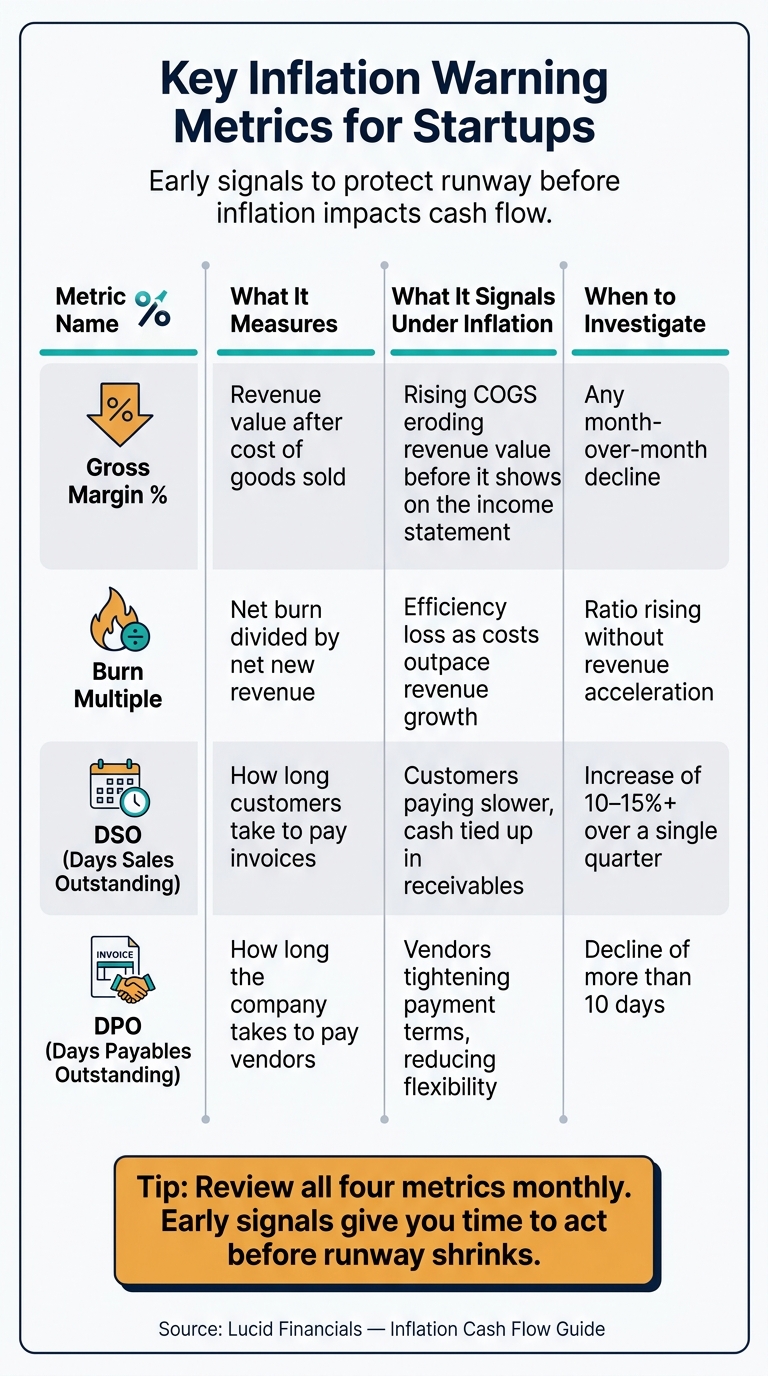
Key Inflation Warning Metrics for Startups: What to Track & When to Act
Once you know where inflation puts pressure on cash flow, the next move is simple: spot the shift in your numbers before runway starts to shrink. Founders who catch inflation early don’t just glance at reports now and then. They review the right numbers on a set schedule.
Forecasts show where risk may show up. After that, you need to know which metrics tend to move first.
Build a 12- to 24-Month Cash Flow Forecast With Inflation Assumptions
One forecast isn’t enough when costs keep climbing. It can fall apart fast. Build three scenarios - base, high, and severe - and track monthly cash flow, runway, and the month your cash drops below your safety buffer.
It also helps to decide your response ahead of time. That way, you’re not making tough calls in a panic. Set a trigger for actions like:
- slowing hiring
- cutting discretionary spend
- accelerating fundraising
After you build those scenarios, keep a close eye on margin and working capital. That’s often where the first signs show up.
Track the Margin and Working Capital Metrics That Move With Inflation
With your forecast in place, the next job is watching the metrics that tend to shift first when inflation hits. Gross margin is one of the clearest early signals. If it drops month over month, inflation may be eating away at revenue value before the damage shows up elsewhere.
Pair that with your burn multiple - net burn divided by net new revenue. If burn goes up while new revenue stays flat, that ratio can get worse fast. That’s a sign inflation is chipping away at efficiency.
On the working capital side, check days sales outstanding (DSO) and days payables outstanding (DPO) every month. If DSO rises by more than 10–15% over one quarter, or DPO falls by more than 10 days, dig into it right away.
| Metric | What It Signals Under Inflation | When to Investigate |
|---|---|---|
| Gross Margin % | Rising COGS eroding revenue value | Any month-over-month decline |
| Burn Multiple | Efficiency loss as costs outpace growth | Ratio rising without revenue acceleration |
| DSO | Customers paying slower, cash tied up | Increase of 10–15%+ over a quarter |
| DPO | Vendors tightening terms, less flexibility | Decline of more than 10 days |
When those numbers start to move, timing matters. If you wait until the next close, you may already be behind.
Use Real-Time Reporting to Catch Changes Sooner
Monthly closes often come too late. By the time the books are closed, the cost jump has already landed. Real-time bookkeeping helps close that gap by categorizing transactions and updating dashboards on a continuous basis, so a spike in spend shows up in days instead of weeks.
That faster view makes it easier to act while you still have room to move. Lucid Financials integrates with Slack, so founders can ask how inflation affects runway and get updated reporting fast. That kind of visibility gives you more time to adjust before inflation puts more strain on cash.
Use these signals to decide when to adjust pricing, cut spend, or tighten financing terms.
How Startups Can Protect Cash Flow During Inflation
When burn, margin, DSO, or DPO start to shift, act fast. That usually means making changes to pricing, spending, and timing before cash gets tight.
Adjust Pricing With Discipline, Not Guesswork
Price changes should come from cash impact, not gut feel. Start by modeling the effect before changing anything. Then test that change against your forecast before rolling it out.
That gives you a clearer view of how a pricing move affects runway before you commit. It also helps you avoid the kind of knee-jerk decision that looks fine on paper but hurts collections or demand a month later.
Cut Low-Value Spend and Improve Payment Timing
Take a hard look at subscriptions and vendors. If a tool no longer pays off, cut it. If a contract still makes sense, use your forecast to push for better terms.
It also helps to automate invoicing and payments. That keeps cash collections and outflows easier to track, and it cuts billing delays that can quietly drain liquidity.
Stress-Test Debt, Reserves, and Operating Plans
Use your forecast to test tough scenarios before they happen. Look at payment delays, hiring freezes, and customer losses, then measure the effect on cash, runway, and collections.
Tie those results back to key drivers like essential financial metrics and payment timing. And don’t let the model drift from reality. Review it against live bank, payroll, accounting, and operations data so it stays lined up with actual liquidity.
Conclusion: Build an Inflation-Aware Cash Flow Process
Inflation usually creeps in quietly. Then, all at once, it starts squeezing cash flow. Higher burn, weaker buying power, and tighter working capital can show up before a team has time to react. And when those signals become obvious, runway is often already taking a hit. That’s why inflation isn’t just a forecasting issue. It’s a process issue.
The fix is pretty simple in theory: treat inflation like a standard input in your model, not a special case. Update forecasts on a set schedule. Keep a 13-week rolling cash flow forecast so you can track short-term liquidity without guessing. Run three scenarios to see how runway changes under different inflation pressures. Then tie each review back to the numbers that matter most: burn, runway, and liquidity. If the model matches where the business stands right now, you can make better calls on pricing, spending, or financing while there’s still time to act.
It also helps to cut the delay between what happens in the business and what shows up in the forecast. Connect bank, payroll, and invoicing data so changes flow in faster. AI-powered forecasting helps shorten the gap between a cost shift and the model update. Lucid Financials helps founders keep books current with AI-powered forecasting, Slack-based support, and investor-ready reporting. The aim is straightforward: spot inflation pressure early and protect runway before cash gets tight.
FAQs
How does inflation reduce startup runway?
Inflation cuts into startup runway because it pushes up operating costs - like payroll, rent, and day-to-day expenses - faster than revenue grows. The result is higher net burn, which means your cash lasts for fewer months.
It also makes planning harder. When costs move around more than expected, forecasts get less precise, and cash gaps can show up if money coming in doesn't keep pace. As burn rate climbs, runway gets shorter unless you trim spending, tighten working capital, or set aside more cash.
Which cash flow metric worsens first?
DSO (days sales outstanding) often gets worse first. When inflation climbs and the economy tightens, customers tend to pay more slowly. That pushes receivables out and cuts cash coming in before higher costs and thinner margins show up in full.
When should a startup raise prices during inflation?
A startup should think about raising prices when scenario analysis shows that rising costs or slower revenue growth are starting to squeeze the business. It also makes sense to revisit pricing when growth comes in below plan, or when margins need protection as inflation and other economic shifts put pressure on the numbers.
Before changing anything, run AI-powered what-if simulations to estimate how a price increase could affect cash flow and runway. Then watch customer response and operating costs closely so pricing stays in line with the company’s overall financial health.