AI is transforming ESG reporting for startups by automating tedious tasks, improving accuracy, and aligning data with global standards. Here's what you need to know:
- What is ESG Reporting? It's about sharing metrics on environmental impact (like emissions and energy use), social factors (such as diversity and labor practices), and governance (like risk management and policies).
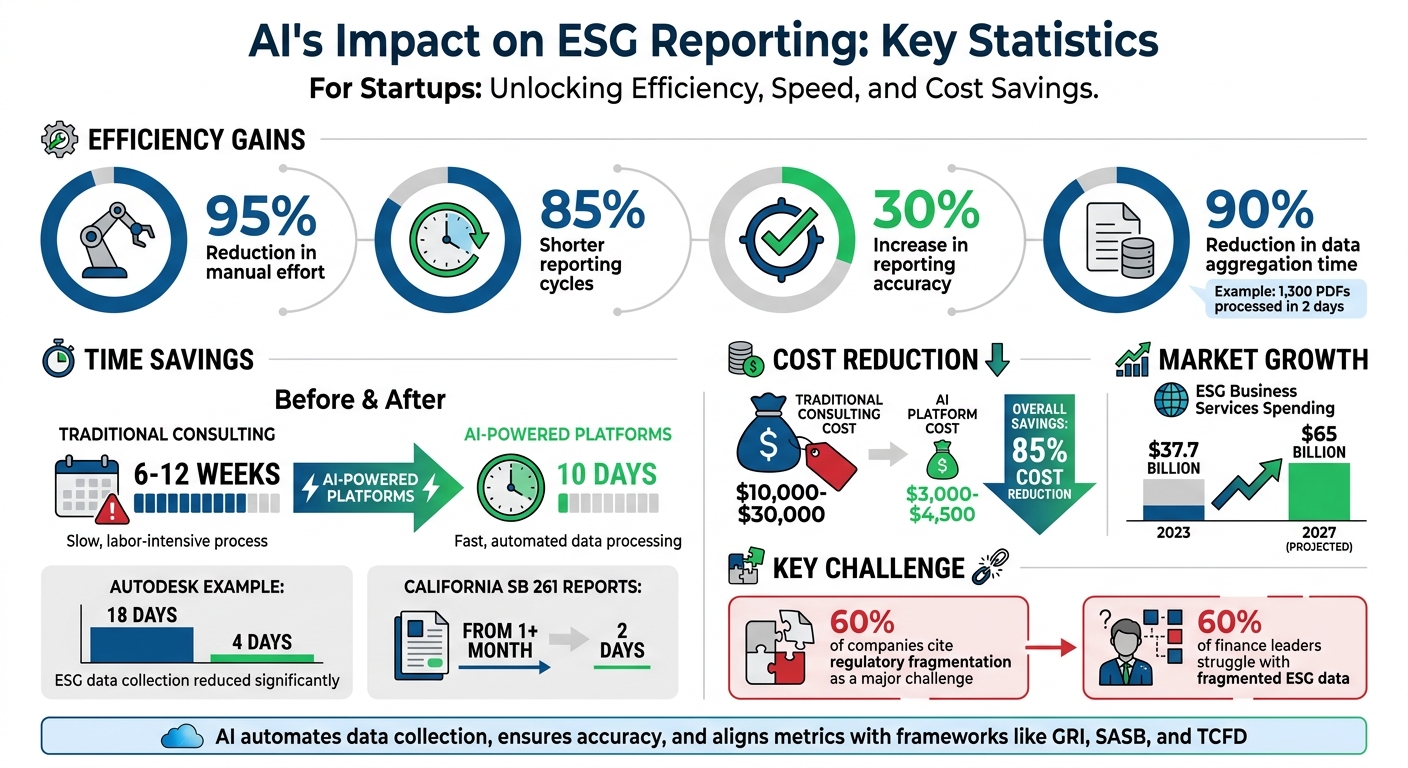
- Why AI Matters: AI slashes manual effort (by up to 95%), shortens reporting cycles (by up to 85%), and catches errors in real time.
- How AI Works: It automates data collection (e.g., from PDFs, ERP systems, IoT sensors), ensures accuracy with anomaly detection, and aligns metrics with frameworks like GRI, SASB, and TCFD.
- Challenges: Poor data quality and changing regulations can hinder AI implementation, but tools with clear data tracking and human oversight can help.
AI-powered ESG tools save time, cut costs, and help startups meet investor and regulatory expectations efficiently.
AI Impact on ESG Reporting: Time and Cost Savings for Startups
How AI Simplifies ESG Data Collection and Validation
Automating Data Collection
AI takes the hassle out of manual data collection by pulling information from various systems with ease. Instead of sifting through utility bills, HR spreadsheets, or supplier portals, AI can use Optical Character Recognition (OCR) and Large Language Models (LLMs) to extract details like meter IDs or vendor information directly from PDFs and emails. Want to differentiate between air travel and rail emissions? AI-powered computer vision can auto-tag receipts into the correct CO2e categories.
Through secure APIs, AI platforms can automatically retrieve data from ERP systems, HRIS platforms, and cloud tools. IoT sensors further enhance this process, offering real-time data streams for ongoing ESG monitoring. All these inputs are funneled into centralized "data lakes", creating a single, reliable source for ESG information.
For example, Autodesk Inc. cut its ESG data collection time from 18 days to just 4 in fiscal year 2024 by leveraging AI connectors for ERP systems and IoT sensors. This saved countless finance hours and showcased how AI can simplify ESG compliance, even for startups. A smart way to start? Pilot AI automation with straightforward data like electricity usage or travel expenses before moving on to more complex Scope 3 emissions.
Once the data is gathered, AI takes the next step: ensuring its accuracy.
Ensuring Data Accuracy and Consistency
AI doesn’t just collect data - it ensures the numbers add up. By normalizing units and using real-time anomaly detection, AI cross-checks data from multiple sources to ensure everything is consistent and accurate. Instead of waiting for year-end audits, these systems flag outliers, inconsistencies, or missing values as they happen.
In 2024, an AI system from Kyoto caught a major error where a client had mislabeled plastic packaging as paperboard. This mistake, if left uncorrected, would have led to a 70% underreporting of emissions. Thanks to AI, the issue was fixed before the CDP report submission, avoiding regulatory trouble. Kashyap Kompella, CEO of RPA2AI Research, highlights the importance of human oversight in tandem with AI:
"Humans need to verify the output of GenAI, as it can hallucinate. But even with this quality check in place, AI has the potential to boost productivity".
AI systems also create immutable audit trails, linking every data point back to its original source. This transparency ensures a clear record of data lineage, making it "audit-ready" for investors or regulators. Organizations using AI for ESG data management report a 30% increase in reporting accuracy, giving them peace of mind in an era of heightened scrutiny.
sbb-itb-17e8ec9
AI and ESG Reporting Frameworks
Key ESG Frameworks Startups Should Know
Understanding ESG reporting begins with knowing which frameworks are most relevant to your startup. The Global Reporting Initiative (GRI) is the go-to global standard for impact reporting, covering everything from energy consumption to labor practices. Meanwhile, the Sustainability Accounting Standards Board (SASB) zeroes in on industry-specific financial materiality - essentially, the metrics investors care about most. The Task Force on Climate-related Financial Disclosures (TCFD) is crucial for addressing climate-related financial risks, and the GHG Protocol sets the benchmark for calculating Scope 1, 2, and 3 greenhouse gas emissions.
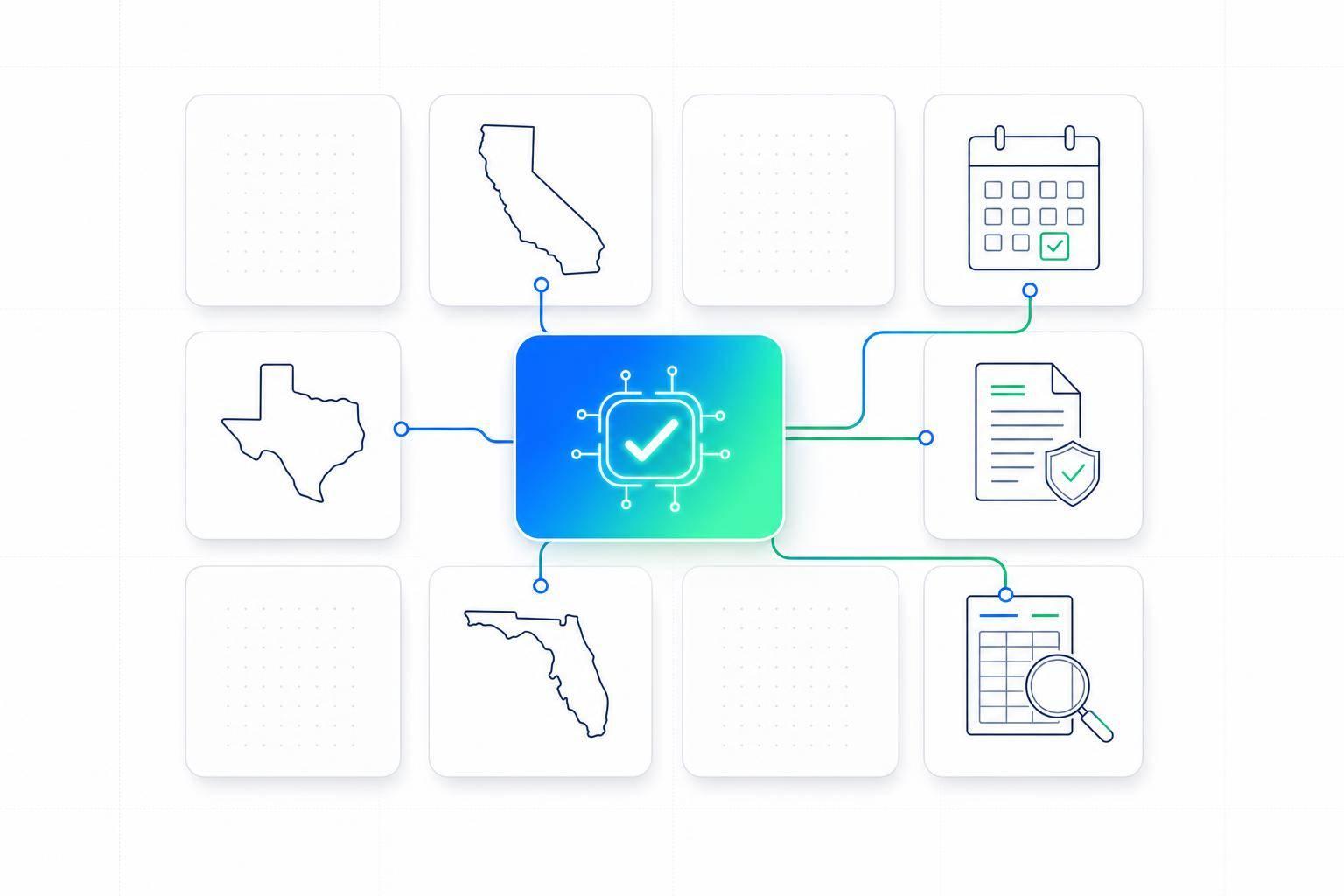
For startups operating in the U.S., particularly in California, compliance with SB 253 and SB 261 is becoming increasingly important. These state mandates require detailed disclosures on climate-related risks and emissions data, making them a top priority for companies with significant operations in California. Given the complexity of these frameworks, AI plays an essential role in automating the alignment of data to meet these diverse requirements.
How AI Maps Data to Reporting Standards
AI takes ESG compliance to the next level by automating the alignment of your data with multiple reporting standards in a single step. It can seamlessly map internal data - like utility bills or financial records - to frameworks such as GRI, SASB, and TCFD. This process ensures that your data meets the specific requirements of each standard without manual intervention.
For example, one company used an AI-powered utility bill scanner to process 1,300 PDFs in just two days, slashing data aggregation time by 90%. AI also excels at gap analysis, scanning draft ESG reports against framework guidelines to identify missing information or inconsistencies before submission. Handling Scope 3 emissions, often the most challenging part of ESG reporting, AI employs Natural Language Processing (NLP) for "fuzzy matching." This technique assigns the correct emission factors to raw spend data, converting accounting figures into accurate emissions data automatically.
AI-powered platforms not only simplify these processes but also dramatically reduce the time required for ESG audits. Tasks that once took months can now be completed in weeks. For instance, California SB 261 Climate-Related Financial Risk reports, which previously needed over a month to prepare, can now be completed in just two days. Jørgen Westrum Thorsen, Senior Manager at Wallenius Wilhelmsen, highlights the broader impact of AI in ESG reporting:
"Having an efficient system is vital for competitive advantage and creates an understanding of ESG goals across the organisation".
Common Challenges in AI-Powered ESG Reporting
Data Availability and Quality Issues
One of the biggest hurdles in AI-driven ESG reporting is dealing with poor data quality. AI systems depend on consistent, reliable data to generate trustworthy insights, but ESG data often falls short. It’s frequently unstructured, inconsistent, and incomplete, making it difficult for AI to process effectively. On top of that, ESG data arrives in various formats and units, adding another layer of complexity.
"AI systems rely heavily on high-quality, consistent, and comprehensive data to generate accurate insights. However, ESG data often varies in format, completeness, and reliability, posing a major obstacle to effective AI deployment." - EcoActive ESG
For startups, limited budgets often mean AI implementation has to happen in stages. But there are ways to streamline the process. For example, natural language processing (NLP) can help consolidate unstructured ESG data. Connecting AI tools directly to systems like ERP, HRIS, or utility APIs can automate data collection, minimizing manual errors and improving consistency. This approach can reduce manual efforts by anywhere from 30% to 95%, while also keeping data up to date.
Another challenge is the lack of transparency in some AI models, which can make auditing difficult. To address this, it's important to use tools that provide clear data lineage - a timestamped record of every data source, transformation, and validation step. Including human oversight for reviewing AI-flagged anomalies further ensures accuracy and builds trust in the system.
While data quality is a critical issue, the ever-changing regulatory landscape adds another layer of difficulty.
Navigating Regulatory and Compliance Changes
Beyond data challenges, shifting regulations make ESG reporting even more complicated. Regulatory requirements are evolving quickly, making compliance a moving target. For instance, the European Union’s Corporate Sustainability Reporting Directive (CSRD) now mandates sustainability reporting for around 50,000 companies. In the U.S., SEC climate rules add complexity, with over 60% of companies citing regulatory fragmentation as a major challenge.
AI can help simplify this by automating the process of mapping internal data to various frameworks like CSRD, GRI, SASB/ISSB, and ESRS, across different jurisdictions. Instead of waiting for annual reporting cycles, companies can use AI-powered dashboards for real-time compliance monitoring. These tools can alert teams to regulatory changes, data inconsistencies, or missing values, significantly reducing compliance review cycles and audit prep time - sometimes by as much as 75%.
The key is to select AI models specifically trained in sustainability taxonomies and regulatory frameworks. These models use advanced techniques like retrieval-augmented generation to produce outputs that meet compliance standards. Additionally, maintaining immutable audit trails - records of model prompts, outputs, and supporting evidence - can demonstrate accountability to external auditors.
AI-Powered ESG Reporting & Building a Startup That Survives the Storm | Innovantage Podcast #38
Getting Started with AI-Powered ESG Reporting
Once you've tackled data collection, validation hurdles, and regulatory mapping, it's time to shape a clear ESG reporting strategy for your startup.
Identifying Your ESG Reporting Needs
The first step is figuring out which ESG metrics your startup needs to track. To do this, compile a thorough inventory of all relevant data sources. This might include energy and utility bills, procurement records, finance systems, HR data (such as diversity and equity metrics), and operational logs. By doing this, you'll uncover both the data you already have and any gaps that need to be filled.
Next, align your data inventory with the ESG frameworks that apply to your business. Regulatory fragmentation is a major roadblock for over 60% of companies, so getting this alignment right from the beginning can save you a lot of headaches later on.
A materiality assessment will help you pinpoint the ESG factors that matter most to your business and stakeholders. AI can play a big role here by analyzing "double materiality" gaps - areas where supplier data or internal reporting formats don’t match up. Clearly define the tasks AI will handle, such as extracting data, conducting benchmark analyses, or creating narrative disclosures. This targeted approach ensures you're solving real problems rather than adopting technology just for the sake of it.
Once you've nailed down your reporting needs, the next step is finding an AI platform that can unify and streamline your ESG data.
Choosing the Right AI Platform
With a clear understanding of your data and reporting needs, selecting the right technology becomes essential. Start by prioritizing data unification and auditability. Look for platforms that consolidate data from multiple sources into a single, auditable record. These systems should also provide a complete data lineage, showing exactly how AI-generated calculations are made. Since 60% of finance leaders struggle with fragmented ESG data, unifying it can resolve many of these challenges.
Regulatory flexibility is another must-have. Choose a platform that supports multiple frameworks - such as CSRD, ESRS, GRI, ISSB, and emerging local mandates - without requiring manual reformatting for each one. This "measure once, report everywhere" approach can cut reporting time by as much as 90%.
When it comes to ESG-specific needs, specialized ESG AI tools often outperform general-purpose systems like ChatGPT. Purpose-built models are designed to understand regulatory frameworks and climate science, making them up to 30% more accurate for sustainability-related KPIs.
For startups that need to manage both financial and ESG compliance, integrated platforms can be a game-changer. Take Lucid Financials, for example. It combines AI-powered bookkeeping, tax services, and CFO support in one system, delivering real-time insights via Slack. Although Lucid is primarily focused on financial management, its ability to unify data and provide instant, AI-driven answers shows how modern tools can reduce fragmentation and help founders stay focused on growth instead of manual reporting.
Building a Long-Term Reporting Strategy
Once you've streamlined your data collection and validation processes, adopting a continuous monitoring approach will strengthen your ESG strategy over the long haul. Continuous data ingestion paired with AI-driven alerts allows you to spot gaps immediately, rather than waiting for annual reporting cycles to expose them. This proactive stance not only improves decision-making but also helps teams explain why certain risks were prioritized and how those decisions were made.
To ensure success, sustainability teams should collaborate closely with IT and finance departments. This teamwork helps identify existing data silos and ensures that AI tools integrate seamlessly with your company’s current systems. Such coordination is especially important as your company scales, ensuring your ESG tools remain efficient and aligned with your growth.
Additionally, as you refine your long-term plan, consider the environmental impact of the AI tools you’re using. Running large language models can have a significant carbon footprint, so it's important to choose platforms that align with your sustainability goals. Testing different models and prompting methods before full implementation can also help you better understand how these tools behave. With ESG business services spending expected to jump from $37.7 billion in 2023 to nearly $65 billion by 2027, investing time now to choose the right tools will set you up for success as reporting demands increase.
Conclusion
Traditional consulting methods often required 6–12 weeks and cost between $10,000 and $30,000. AI platforms, however, have drastically reduced this timeline and expense - now delivering audit-ready reports in just 10 days for $3,000–$4,500. That’s an incredible 85% reduction in costs.
Beyond saving time and money, AI offers a level of precision that’s hard to match. For example, AI can map emissions data to specific national inventory factors, such as Portugal’s 0.107 kg CO₂eq/kWh, instead of relying on generic EU averages (0.213–0.220 kg CO₂eq/kWh). This avoids overreporting, a critical detail for European VCs managing SFDR Article 8/9 funds, where VSME-aligned ESG documentation is often a prerequisite for issuing term sheets.
AI doesn’t just move faster - it amplifies expertise. As Manifest Climate highlights:
"The most effective use of AI won't be about replacing expertise. It will be about scaling it".
Small teams can use AI to turn unstructured disclosures into structured, actionable insights, all while maintaining full source traceability.
For startups juggling financial and ESG compliance, having an all-in-one solution is essential. Lucid Financials offers just that - combining AI-driven bookkeeping, tax services, and CFO support. With real-time insights available through Slack and investor-ready reports starting at only $150 per month, Lucid Financials allows founders to focus on growth instead of getting bogged down by manual reporting.
FAQs
What data should we automate first for ESG reporting?
Begin by automating critical sustainability metrics, including Scope 1-3 emissions, utility usage, and invoices. This approach helps ensure compliance with regulations like the SEC climate rules and the EU CSRD.
By automating environmental data - such as carbon emissions, utility PDFs, and IoT readings - alongside financial data like invoices and payroll, you can significantly reduce errors, simplify reporting processes, and gain real-time insights. This creates a reliable foundation for managing ESG compliance effectively and efficiently.
How do we audit AI-generated ESG numbers?
Auditing AI-generated ESG numbers requires a careful look at data traceability, accuracy, and regulatory compliance. This process involves steps like reviewing the sources of data, ensuring the AI's calculations are transparent, and confirming that the results align with established standards.
AI tools can make audits more manageable by offering traceable data and consistent outputs. However, it's crucial to validate that these outputs not only meet all regulatory requirements but also maintain transparency at every stage of the process.
How can AI keep us compliant as ESG rules change?
AI is proving to be a game-changer for startups aiming to keep up with constantly changing ESG (Environmental, Social, and Governance) regulations. It provides real-time updates on regulatory changes and ensures reports align with the latest guidelines. For instance, it can track updates from regulatory bodies like the SEC and automatically adjust reporting processes to meet new requirements.
By automating data collection and analysis, AI not only cuts down on manual work but also reduces the risk of errors that could lead to non-compliance. This means startups can deliver accurate, investor-ready disclosures without the hassle of juggling complex rules. The result? Greater transparency and trust, which are crucial as ESG regulations continue to evolve.